Why Your Posture Fix Keeps Not Sticking (And What Actually Works)
Quick Answer: Posture fixes fail because most people treat posture as a position to hold rather than a strength and mobility issue to train — pulling your shoulders back without the muscle endurance to sustain it just creates a new, tiring habit that collapses within an hour.
You’ve stood up straight in the mirror a hundred times. By 3pm you’re slouched over your keyboard again, wondering if you’re just broken. You’re not — you’ve been fixing the symptom instead of the cause.

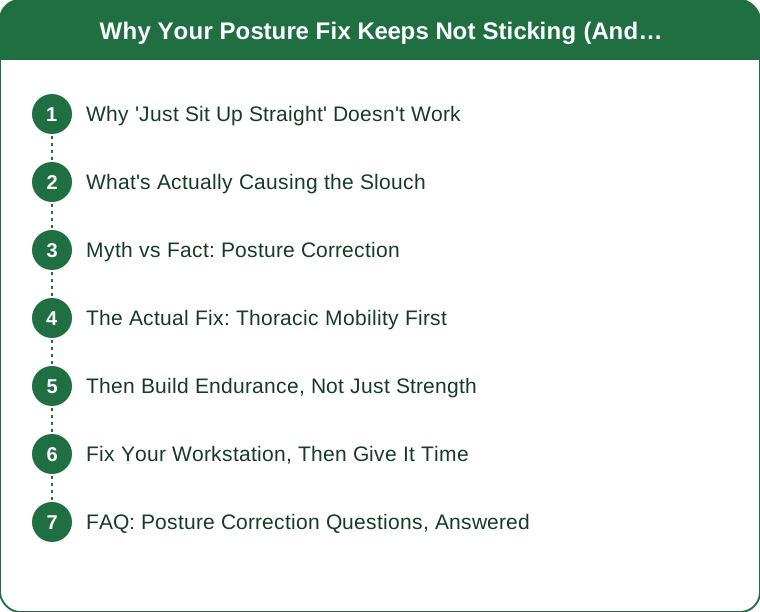
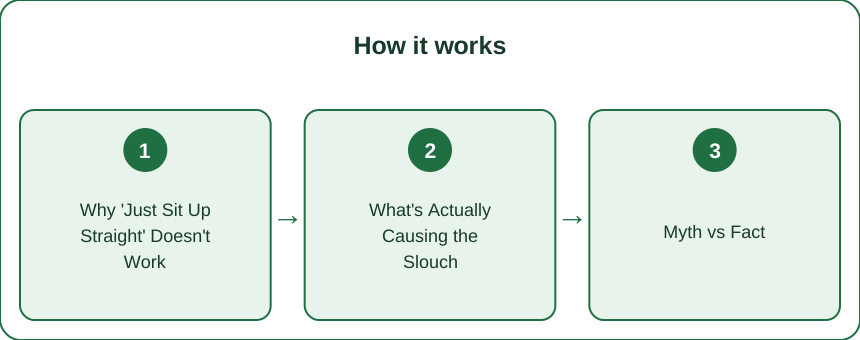
Why ‘Just Sit Up Straight’ Doesn’t Work
Consciously pulling your shoulders back uses your upper trapezius and rhomboids in a way they weren’t built to sustain for hours. Within 20-30 minutes, those muscles fatigue and you slump right back — often further than before, because they’re now tired. Posture correction has to come from endurance training, not a held instruction.
What’s Actually Causing the Slouch
In most desk workers, it’s not weak shoulders — it’s tight hip flexors and a stiff upper back (thoracic spine) from hours in a seated, flexed position. If your thoracic spine can’t extend, your shoulders can’t stay back no matter how hard you try. Test it: try to look straight up at the ceiling while seated. If your neck does most of the work instead of your upper back, that’s your bottleneck.
Myth vs Fact: Posture Correction
Myth: A posture brace fixes the problem. Fact: Braces can help you notice slouching, but worn for more than an hour or two a day they let your postural muscles get weaker from disuse — you end up needing the brace more, not less.
Myth: Strong abs fix bad posture. Fact: Ab strength helps, but the muscles that most directly hold your upper back upright are your mid-back extensors and lower traps — a strong six-pack with a stiff thoracic spine still slouches.

The Actual Fix: Thoracic Mobility First
Before adding strength work, spend 2 minutes a day on thoracic extension — foam roller across the mid-back, or a simple seated rotation stretch. Without this range of motion, strengthening exercises just reinforce the same limited position. Most people feel looser through the chest within a week.
Then Build Endurance, Not Just Strength
Once mobility improves, train the muscles that hold posture upright for duration, not just for a single hard set. Wall slides, prone Y-raises, and band pull-aparts done for 2-3 sets of 15-20 reps, 3x a week build the postural stamina that a single ‘straighten up’ cue never will.
Fix Your Workstation, Then Give It Time
Fix Your Workstation Second, Not First
A monitor set too low, a chair with no lumbar support, or a keyboard too far away will undo weeks of posture work in a single workday. Set your monitor top at eye level, elbows at roughly 90 degrees, and feet flat — this removes the environmental pull toward slouching so your new strength actually gets to hold.
How Long Real Change Takes
Expect 2-3 weeks before sitting upright starts to feel less effortful, and 6-8 weeks of consistent mobility plus strength work before it holds without conscious thought. Posture change is a strength adaptation timeline, not an overnight fix — which is exactly why the quick-fix approach keeps failing people.
FAQ: Posture Correction Questions, Answered
Do posture correction devices actually work?
They can work as a short-term reminder, but relied on alone they tend to weaken the muscles you need long-term — use them as a cue, not a crutch, and pair with active strength work.
Can bad posture be fixed at any age?
Yes — thoracic mobility and postural muscle endurance both respond to training at any age, though older adults may need a slightly longer, gentler ramp-up.
How do I know if it’s a mobility issue or a strength issue?
Try the overhead ceiling-look test: if your neck compensates instead of your upper back extending, mobility is the bigger limiter for you right now.
TL;DR:
- ‘Sit up straight’ fails because it relies on muscles that fatigue fast
- The real limiter for most people is stiff thoracic mobility, not weak abs
- Fix mobility first (2 min/day), then build postural endurance (2-3x/week)
- Adjust your workstation so gravity isn’t working against your new strength
- Give it 6-8 weeks before expecting posture to hold without thinking about it
This is general information, not medical advice — persistent pain or numbness warrants seeing a physical therapist.
Keep Reading
This article is for general informational and styling purposes only. Fit, sizing, and product availability may vary.