Why Your Desk Chair Is Fighting Your Posture Fix (And What Actually Helps)
Quick Answer: Posture exercises fail at a desk when the chair pulls you back into the same slump 20 minutes later. Fix the chair first — seat height, lumbar support, and a 30-minute stand-up rule — then the exercises actually hold.
You do your morning posture routine. Shoulders back, chest up, feels great. By your second Zoom call, you’re rounded forward again and you didn’t even notice it happening. That’s not a discipline problem — it’s a chair problem, and it’s fixable in about ten minutes.

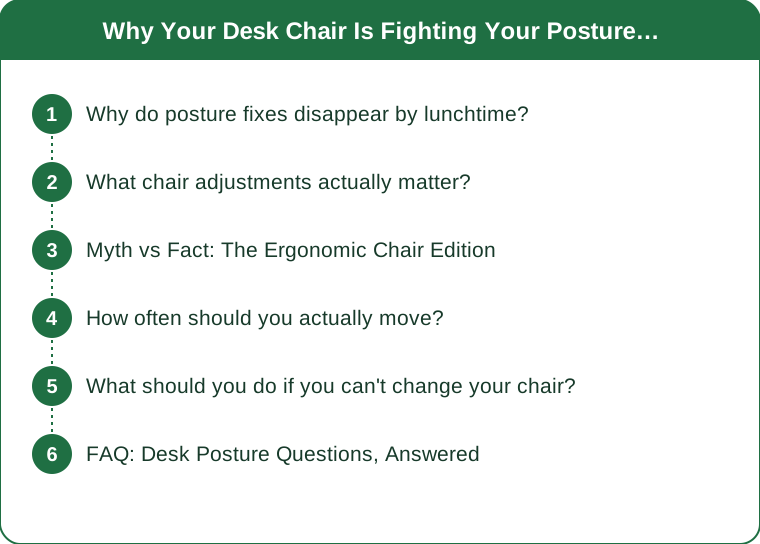
Why do posture fixes disappear by lunchtime?
Because your chair is quietly outvoting your muscles. A seat that’s too low, too soft, or missing lumbar support pulls your pelvis into a backward tilt within 15-20 minutes, and your spine follows.
Good posture takes constant small muscle effort to fight a bad chair. Nobody wins that fight all day — your postural muscles fatigue, and gravity plus a bad seat wins by early afternoon. The exercises aren’t wasted; they’re just outmatched by the setup.
This is why people who feel great after physical therapy or a posture class still slump at their desk two hours later — the room they return to hasn’t changed.
What chair adjustments actually matter?
Three settings do almost all the work:
- Seat height: feet flat, knees at roughly 90 degrees, hips level with or slightly above knees
- Lumbar support: the curve should press into your lower back, not your mid-back — most people have it positioned too high
- Armrest height: shoulders relaxed and level, not shrugged up or drooping
Get these three right and your spine has a fighting chance without any conscious effort. Get them wrong and no amount of willpower fixes it for long.
Myth vs Fact: The Ergonomic Chair Edition
Myth: An expensive ergonomic chair automatically fixes posture. Fact: A $1,200 chair set up wrong slumps you just as fast as a $50 one. Adjustment matters more than price tag — most office chairs are used with at least one major setting wrong, usually seat height.
Myth: Sitting up straight all day is the goal. Fact: Rigid, locked-straight posture for 8 hours is its own problem — it fatigues the same muscles a slump does, just differently. The real goal is movement variety, not one perfect frozen position.
Myth: A lumbar pillow fixes any chair. Fact: It helps, but only if seat height is already correct. Add a lumbar pillow to a seat that’s too low and you’ve just moved the problem up your spine.

How often should you actually move?
Every 30 minutes, change something — stand, stretch, or just shift your seated position. This isn’t about burning calories; it’s about not letting any one posture (even a good one) become the new slump.
A simple habit: set a recurring 30-minute phone timer labeled ‘shift.’ Stand for your next call, or just roll your shoulders and reset your seat position. People who move every 30 minutes report noticeably less end-of-day stiffness than those who sit still for 2+ hours straight, even with a great chair.
What should you do if you can’t change your chair?
Not everyone can buy a new chair or gets to pick their office setup. Two workarounds:
- A rolled towel or small cushion behind your lower back approximates lumbar support in almost any chair
- A stack of books or a footrest fixes seat height if your feet dangle
Neither is perfect, but both remove the two biggest culprits — no lumbar contact and wrong seat height — for under $5.
FAQ: Desk Posture Questions, Answered
Should I buy a standing desk instead?
A standing desk helps variety, but standing still and slumped is just a vertical version of the same problem. Alternate sitting and standing rather than treating standing as the fix.
How do I know if my lumbar support is in the right spot?
Sit all the way back and reach behind your lower back — you should feel the curve pressing into the small of your back, not your ribs. If you feel nothing, it’s positioned too low or too far away.
Is a kneeling chair or balance ball better?
Both reduce back support entirely, which can help some people engage core muscles but tires others out fast. Try either for short blocks (under an hour) rather than a full workday swap.
TL;DR:
- Posture exercises fail at a desk when the chair pulls you back into a slump within 20 minutes
- Fix seat height, lumbar support, and armrest height first — most chairs have at least one wrong
- Move every 30 minutes; rigid perfect posture all day fatigues muscles too
- No new chair? A rolled towel and a footrest fix the two biggest issues for under $5
Fix the chair before you blame your discipline — the exercises will finally stick.
Keep Reading
This article is for general informational and styling purposes only. Fit, sizing, and product availability may vary.