Why Your Posture Quietly Changes When the Seasons Do
Quick Answer: As the weather cools, most people spend more time seated indoors, wear heavier clothing that loads the shoulders, and unconsciously adopt a slight protective hunch in the cold. Each effect is small; together they produce a measurable shift toward rounded shoulders and forward head position over about six weeks. The counter is not better sitting - it is more frequent position change, two or three specific mobility drills, and deliberate attention to how you carry bags and how warm you keep your upper back.
Nothing hurt in July. By late October your neck is tight and your upper back aches by 3pm.
The chair did not change. Six other things did.

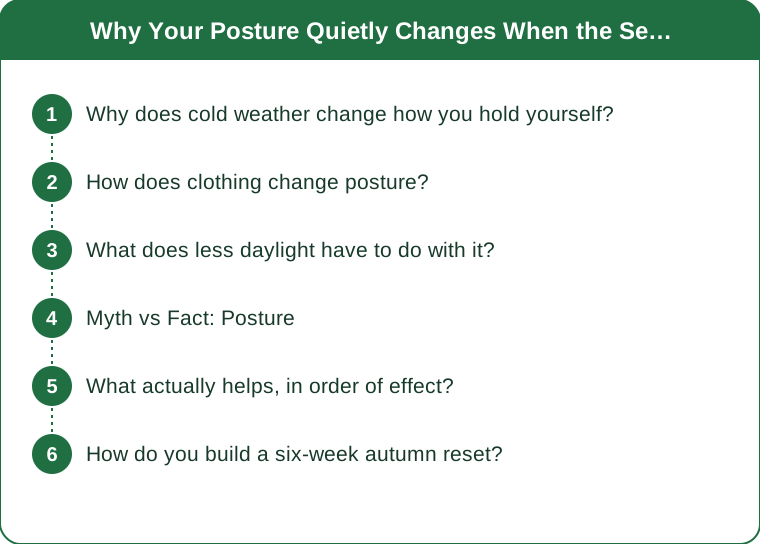
Why does cold weather change how you hold yourself?
Cold triggers a protective posture - shoulders elevate toward the ears, the head draws forward and down, arms tuck in. It is a heat-conservation response and it is largely unconscious.
Held long enough, that becomes the resting position. Muscles adapt to the length they most often sit at, and the upper trapezius and levator scapulae are extremely willing to shorten.
Muscle tissue is genuinely stiffer at lower temperatures, which reduces range of motion and makes the shortened position feel more normal than it should.
Shivering and micro-tensing add low-level sustained contraction across the neck and shoulders throughout a cold day.
The effect is largest at transitions - stepping outside, waiting for transport, walking from the car - and those are exactly the moments nobody is thinking about posture.
And a cold upper back is uniquely provocative, which is why a scarf or a warmer layer over the shoulders often does more for neck tension than any stretch does.
How does clothing change posture?
Heavier coats load the shoulders continuously. A winter coat weighs several pounds and hangs from exactly the structures that are already working.
Layers restrict shoulder and thoracic movement, so the natural micro-adjustments you make all day get reduced in range and frequency.
Bags become heavier in cool weather - an added layer, an umbrella, a larger water bottle - and single-shoulder carrying is asymmetric loading repeated hundreds of times.
Hoods pull the head forward when up, particularly heavier ones, which is a small persistent tug in the wrong direction.
Footwear changes too. Boots with a different heel height alter the whole postural chain from the ground up, and people switch in a single day.
And bulkier clothing changes how you sit, frequently pushing you further forward on a chair and out of contact with the backrest.
What does less daylight have to do with it?
Reduced daylight means more time indoors and more time seated, which is the largest single contributor of everything in this article.
Screen time typically rises in autumn, and forward head posture at a screen is the most-studied version of this problem.
Lower light levels cause people to lean toward screens and reading material, which drives head-forward posture directly.
Outdoor activity declines, removing the varied movement that was quietly resetting everything all summer.
Mood and energy shifts affect posture too - lower energy correlates with more slumped positions, and this is well recognised.
And vitamin D status drops as sun exposure falls, which is worth mentioning because low vitamin D is associated with muscle aches and weakness. If you are chronically indoors, it is worth discussing with a clinician. This is general information, not medical advice.

Myth vs Fact: Posture
Myth: there is one correct posture. Fact: the best posture is a varied one. Research increasingly points to position change frequency, not position perfection, as what matters for discomfort.
Myth: slouching causes back pain. Fact: the relationship between static posture and pain is much weaker than commonly assumed. Sustained immobility in any position is a stronger predictor than the shape of the position.
Myth: you need an expensive ergonomic chair. Fact: chair quality matters less than how often you change position. A basic chair used with movement beats a premium chair sat in rigidly for four hours.
Myth: posture correctors fix posture. Fact: they provide a temporary reminder while worn. There is little evidence of lasting change, and reliance can reduce the muscular work that actually builds capacity.
Myth: sit up straight is good advice. Fact: it produces a rigid, effortful position that nobody holds for more than a few minutes, followed by a return to slumping. Change position often instead.
Myth: standing desks solve it. Fact: standing all day produces its own problems. Alternating between sitting and standing every 30 to 45 minutes is what the evidence actually supports.
Myth: rounded shoulders means weak back muscles. Fact: it is usually more about sustained position and habit than about strength. Strengthening helps, but position variety helps faster.
What actually helps, in order of effect?
Change position every 30 minutes. This is the highest-value intervention available, it is free, and it outperforms every equipment purchase. A timer works better than intention.
Get the shoulders warm. A scarf, a layer over the upper back, or a warmer room reduces the protective hunch at its source.
Do a thoracic extension over a chair back - hands behind head, lean back over the top of the chair, five slow breaths, three times a day. This directly counters the dominant seasonal shift.
Add a doorway pec stretch, 30 seconds each side, twice a day, since the chest is what shortens when the shoulders round.
Switch bag shoulders deliberately, or better, use a backpack in cool weather when you are carrying more.
Raise the screen so the top of the monitor is at eye level, which addresses forward head posture more effectively than any reminder to sit up.
Add two strength sessions a week including rows and any overhead work, which builds the capacity that makes good positions sustainable rather than effortful.
And walk outside daily even briefly, which handles the daylight, the movement variety and the mood component simultaneously.
How do you build a six-week autumn reset?
Week one: install the timer. Change position every 30 minutes and do nothing else. Establish that alone.
Week two: add the thoracic extension three times daily, at the same times as existing habits - morning coffee, lunch, end of work.
Week three: fix the workstation. Monitor to eye level, chair so feet are flat, and remove whatever is causing you to lean.
Week four: add the pec stretch and switch to a backpack.
Week five: add two strength sessions with rows, a carry, and something overhead.
Week six: add a daily outdoor walk, even ten minutes.
Track discomfort rather than posture, because posture is hard to self-assess and discomfort is what you actually care about. A one-to-ten note at the end of each workday shows the trend within two weeks.
And see a physiotherapist if pain persists, radiates into the arm, or comes with numbness or weakness. Those are different problems from seasonal stiffness. This is general information, not medical advice.
TL;DR:
- Cold triggers a protective hunch, heavier clothing loads the shoulders, and less daylight means more sitting - all pulling in the same direction.
- The change accumulates over about six weeks, which is why nothing hurt in summer and something does by late October.
- Position variety beats position perfection - change position every 30 minutes and let that be the main intervention.
- Keep the upper back warm; a scarf often does more for neck tension than a stretch does.
- Thoracic extension over a chair back three times a day directly counters the seasonal shift.
- Raise the monitor to eye level and switch to a backpack when you are carrying more.
Pain that radiates, numbs or weakens is a different problem - get it assessed. This is general information, not medical advice.
Keep Reading
This article is for general informational and styling purposes only. Fit, sizing, and product availability may vary.