Sleeping Posture: The Eight Hours of Alignment Nobody Programs
Quick Answer: Side sleeping with a pillow between your knees is the best default for spinal alignment, with a pillow thick enough to fill the gap between your ear and shoulder. Back sleepers should put a pillow under the knees. Stomach sleeping cranks your neck sideways for hours and is the hardest position to make work. When you wake up in pain, change one variable — pillow height first — and give it a week.
You’ve optimized your desk chair, your monitor height, and your standing-desk schedule. Eight hours of posture, carefully managed.
Then you go to bed and hand the next eight hours to whatever happens.

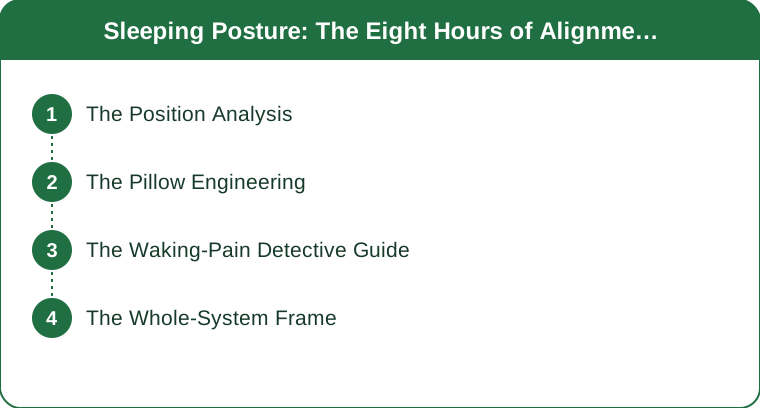
What Is the Best Sleeping Position for Your Spine?
There are really only three, and they’re not equal.
Side sleeping is the most common position and the most forgiving. Roughly 60% of adults sleep this way. It keeps the spine neutral if your pillow is the right height, and it needs one accessory to work properly: a pillow between your knees. Without it, your top leg drops forward and rotates your pelvis all night, which is where a lot of morning lower-back stiffness comes from. For your arms, hugging a pillow beats tucking an arm under your head — that’s the position that produces the numb-arm wake-up.
Back sleeping is technically the best for alignment when you can tolerate it. Your weight distributes evenly and nothing is twisted. Add a pillow under your knees to take the arch out of your lower back. The catch: it worsens snoring and sleep apnea for a lot of people, which is why plenty of back sleepers get routed sideways on medical advice.
Stomach sleeping is the honest problem. Your head is turned 90 degrees for hours, and your lower back is arched the whole time. If you’re committed to it, two harm-reduction moves: use no pillow (or a very flat one) under your head, and put a thin pillow under your pelvis to reduce the arch. If you want to transition away, sleep hugging a body pillow on your side — it gives your arms and front the pressure they’re actually seeking.
One reality check: you change position all night regardless. Most people shift 10–20 times. The goal isn’t holding a perfect position for eight hours; it’s setting up so your most common positions are supported.
How Do You Choose the Right Pillow Height?
The rule: your head should stay level with your spine. Not tilted up, not dropping down.
That means height depends entirely on your position:
- Side sleepers need the thickest pillow — it has to fill the whole gap between your ear and the outside of your shoulder. Broad shoulders need more loft.
- Back sleepers need a medium-to-thin profile. Too thick and your chin gets pushed toward your chest.
- Stomach sleepers need almost nothing — flat, or none.
Fill matters as much as loft. Shredded or adjustable-fill pillows win for anyone between standard sizes, because you can literally remove handfuls until it’s right. Memory foam contours well but comes at a fixed height you can’t tune.
The dead-pillow test: fold it in half and let go. If it stays folded, the fill has collapsed and it’s no longer supporting anything. Most pillows are done at 18–36 months.
Mattress, briefly. Medium-firm has the best evidence for comfort and back pain across most people, with calibration for body weight — heavier sleepers generally need firmer support to avoid hammocking. Anything past 8–10 years is worth auditing.
And on budget: the pillow is the cheap, high-leverage fix. Run the $50 pillow experiment before the $1,200 mattress. It solves the problem more often than anyone selling mattresses would like to admit.

Why Do You Wake Up in Pain? (The Detective Guide)
Morning pain is readable. Match your symptom to its usual cause:
- Stiff neck → wrong pillow height, or stomach sleeping. Change the pillow first, before anything else.
- Low back ache that eases once you move → position and mattress. Try a pillow between the knees (side) or under the knees (back).
- Low back pain that gets worse with rest → this one isn’t mechanical. See a doctor.
- Numb arm → you’re sleeping on it or with it under your pillow. Reposition; hug a pillow instead.
- Shoulder pain → you’re probably sleeping on the bad shoulder. Switch sides or try your back.
- Hip pressure → mattress too firm, or no knee pillow. Try a topper.
The experiment protocol matters more than any single fix. Change one variable and hold it for a full week. Pillow first, then position, then mattress — cheapest and most likely to work, in order. Keep a two-line note each morning. Change three things at once and you’ll never know which one helped.
What Nobody Tells You About Sleep Posture
- Your desk posture and your sleep posture are the same problem. Rounded shoulders from a screen don’t clock out at 6pm — they’re the shape you fall asleep in. Working on rounded shoulders during the day makes the night easier.
- Pre-bed stretching compounds. Five minutes of hip flexor and chest opening before bed means you’re not sleeping on top of eight hours of accumulated tension.
- Your partner and your pet are variables. Motion transfer, edge crowding, a cat parked behind your knees — all of it reshapes your position. Sometimes the fix is genuinely a bigger bed.
- Hotel pillows are the great destabilizer. Stacking two thin ones is usually closer to right than using one wrong-height one. If you’re sensitive, travel with your own.
- Your setup expires. Pregnancy, injury, weight change, age — the arrangement that worked for years stops working, and the fix is re-engineering it rather than assuming you’ve broken.
When to see a professional: morning stiffness lasting more than an hour, pain that worsens with rest rather than movement, numbness or tingling that persists after you get up, or pain that survives a month of honest one-variable experiments. Those patterns can point to inflammatory conditions, disc issues, or nerve compression, and no pillow will address them.
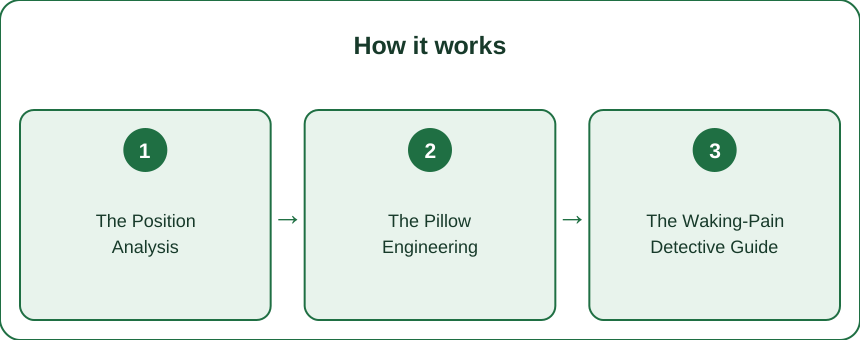
FAQ
Is it bad to sleep on your stomach?
It’s the least alignment-friendly position because your neck stays rotated for hours and your lower back arches. It’s not dangerous, but if you wake with neck stiffness, it’s the first suspect. Harm reduction: no pillow under your head, a thin one under your pelvis.
Should you sleep with a pillow between your legs?
If you side sleep, yes — it’s close to non-negotiable. Without it your top leg drops forward and twists your pelvis all night. Any firm pillow works; a dedicated knee pillow is just a nicer shape.
How often should you replace your pillow?
Every 18 months to 3 years for most types. Use the fold test: fold it and release. If it doesn’t spring back, the support is gone regardless of how it looks.
TL;DR
- Side sleeping with a knee pillow is the best default; back sleeping with a pillow under the knees is the alignment ideal if you tolerate it.
- Pillow height keeps your head level — thick for side, medium for back, near-flat for stomach.
- Stomach sleeping cranks the neck for hours; transition with a body pillow if you can.
- Read your morning pain — stiff neck means pillow, low back means position, worse-with-rest means doctor.
- Change one variable per week. Pillow first, then position, then mattress.
- Pillows die at 18–36 months. Fold test.
Keep Reading
This article is for general informational and styling purposes only. Fit, sizing, and product availability may vary.