Rounded Shoulders Aren't Just From Sitting — Here's What Else Causes Them
Sitting gets blamed for nearly all rounded-shoulder posture, and it plays a real role, but the fuller picture involves a specific muscular imbalance that sitting alone doesn’t fully explain.

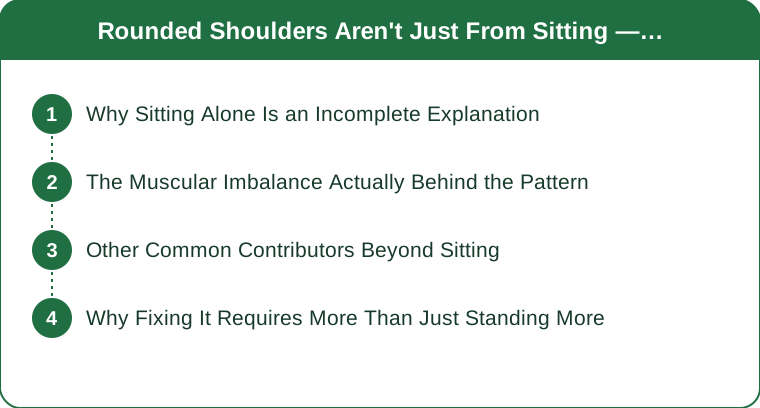
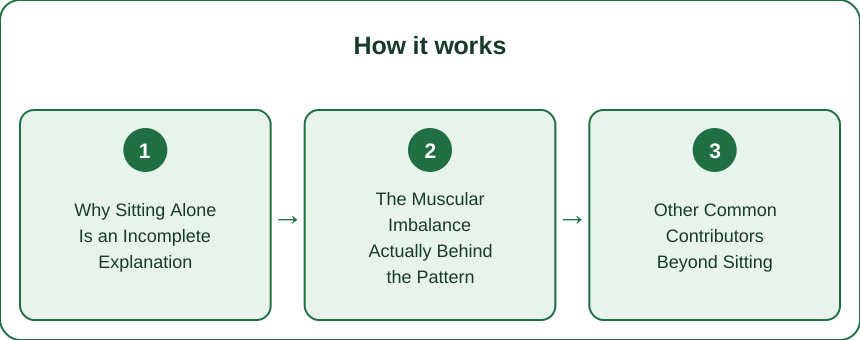
Why Sitting Alone Is an Incomplete Explanation
The gap in the common explanation: plenty of people who sit very little still developing rounded shoulders, and plenty of people who sit all day maintaining decent shoulder posture, which suggests sitting time isn’t the sole driver on its own.
The Muscular Imbalance Actually Behind the Pattern
The real mechanism: rounded shoulders typically reflecting tight, overactive chest muscles paired with weak, underactive upper back and rear shoulder muscles, an imbalance that sitting can worsen but that also comes from any activity heavy on forward, gripping movement.

Other Common Contributors Beyond Sitting
The additional causes: activities like driving, phone use, and even certain strength training patterns that overemphasize pressing movements over pulling movements, all reinforcing the same tight-chest, weak-back imbalance independent of total sitting time.
Why Fixing It Requires More Than Just Standing More
The actual fix: standing more or sitting less addressing only part of the imbalance, while directly strengthening the upper back and rear shoulders alongside stretching the chest is what corrects the underlying muscular pattern, and the frame (rounded shoulders come from a tight-chest, weak-back imbalance that sitting worsens but doesn’t fully cause — standing more without addressing that imbalance directly only solves part of the problem.)
Sitting gets blamed for nearly all rounded-shoulder posture, and it plays a real role, but plenty of people who sit very little still develop rounded shoulders, and plenty of people who sit all day maintain decent shoulder posture, which suggests sitting time isn’t the sole driver on its own. Rounded shoulders typically reflect tight, overactive chest muscles paired with weak, underactive upper back and rear shoulder muscles, an imbalance that sitting can worsen but that also comes from any activity heavy on forward, gripping movement, including driving, phone use, and strength training patterns that overemphasize pressing over pulling. Standing more or sitting less addresses only part of that imbalance, while directly strengthening the upper back and rear shoulders alongside stretching the chest corrects the underlying muscular pattern in a way that posture alone can’t.
Keep Reading
This article is for general informational and styling purposes only. Fit, sizing, and product availability may vary.