The Commuter Slump: Fixing Your Posture Behind the Wheel
Quick Answer: Fix driving posture with a five-minute seat setup: backrest at 100–110° (more upright than feels natural), seat close enough that your wrists rest on top of the wheel with shoulders back, a lumbar cushion or rolled towel at the lower back, and the headrest close enough to touch your head. Then hold the wheel at 8-and-4 and do a chin tuck at every red light.
The desk gets all the posture blame. Meanwhile the car quietly runs the same racket — the average commuter spends five to ten hours a week in a seat that’s slowly sculpting them around a steering wheel.
The reach-forward shoulders. The pelvis rolled backwards. The neck craned toward the windshield.
The fix isn’t a gadget. It’s five minutes in a parked car and one habit at red lights.

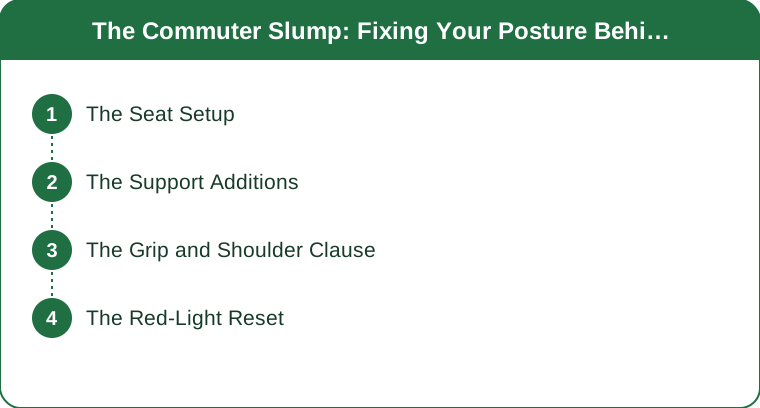
How Should You Set Up Your Car Seat?
Do this parked, engine off, and expect it to feel slightly wrong for the first week. Slumping feels normal because you’ve had years of practice.
1. Backrest: 100–110°. More upright than most people drive. The deep recline is the slump’s opening move — it rolls your pelvis back, which collapses the lower back, which pushes your head forward to see the road.
2. Seat height: hips level with or slightly above your knees. Raise the seat until your thighs are supported without pressure behind the knee, and you can see clearly over the wheel.
3. Distance: wrists on the wheel, shoulders back. With your shoulder blades against the seat, your wrists should rest on the top of the wheel. If you have to reach with straight arms, you’re too far back — and your shoulders will be dragged forward for the entire drive.
4. Pedals: knees softly bent. You should be able to fully depress the brake without lifting your hip off the seat or locking your knee.
5. Mirrors last, and honestly. Set mirrors after posture, in good posture. Then they become a feedback system — when you can’t see properly, you’ve slumped.
What Support Should You Add?
Most car seats are shaped for the average of everyone, which is nobody.
Lumbar support is the single highest-value addition. A dedicated cushion or just a rolled towel at the small of your back stops the pelvis rolling backwards, which is the upstream fix for the entire slump chain — lower back, mid back, shoulders and neck all follow the pelvis.
Headrest position matters more than people realise. Adjust it so the middle of the pad is level with the middle of the back of your head, and close enough that your head can touch it while driving. If your head floats three inches forward of the rest, your neck is freelancing the whole commute — and in a rear-end collision, that gap is exactly what whiplash is made of.
Seat cushion, if you’re short or the seat base slopes back sharply. A wedge cushion that tips slightly forward restores the pelvis position that lumbar support is trying to protect.

Where Should Your Hands Go on the Wheel?
8-and-4, or 9-and-3 — not 10-and-2.
Two reasons. The airbag-era safety guidance moved hands lower so that a deploying airbag doesn’t drive your own arms into your face. And ergonomically, lower hand positions let your shoulders hang relaxed, while the old 10-and-2 position has you subtly shrugging — which is why your upper traps are tight by mile three.
Beyond position:
- Elbows soft, not locked. Locked elbows mean the seat is too far back.
- Grip light. The wheel needs steering, not strangling. Notice your grip at the next traffic light; it’s usually harder than the task requires.
- Alternate hands on long drives rather than resting one arm on the door or the console for an hour, which builds a very reliable asymmetry.
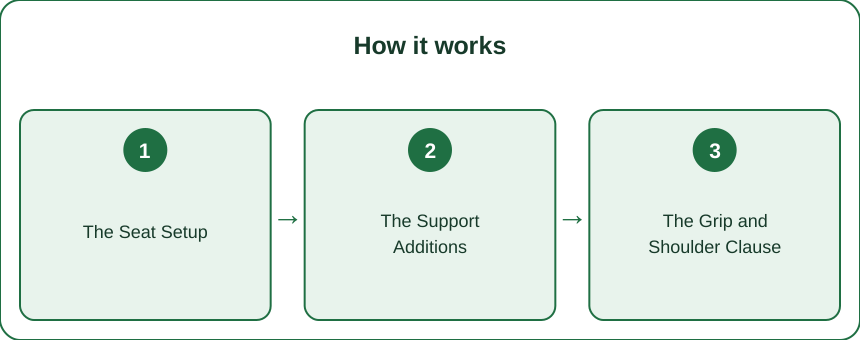
What Nobody Tells You About Driving Posture
Your wallet is doing something to your pelvis. A back-pocket wallet tilts you sideways for the entire drive. Front pocket or console.
Vibration fatigues muscles faster than sitting alone. Road vibration is a real, measured factor in driver back pain — which is why a two-hour drive leaves you stiffer than two hours in an office chair.
Cruise control quietly wrecks your right leg position. Great for the highway, but floating your foot off to the side for an hour is an asymmetry generator. Reposition deliberately.
The seat you love is often the problem. Deeply reclined, bucket-style seats feel wonderful for ten minutes and terrible for ninety.
Getting out is where backs go. After a long drive, tissue is stiff and compressed. Swivel both legs out together, plant both feet, and stand up — don’t twist and lift out of the seat with one leg.
What’s the Red-Light Reset?
One micro-habit, done at every red light. The light lasts longer than the reset does.
- Chin tuck — draw your head straight back over your shoulders (making a double chin, elegantly), hold 3 seconds.
- Shoulder roll — one big roll backwards, letting the shoulder blades settle down and back.
- Full exhale — which relaxes the ribcage and unclenches the jaw you didn’t know was clenched.
Ten seconds. Twenty red lights a week. It adds up to more corrective movement than most people get anywhere else.
On drives over 90 minutes, add a proper stop: two minutes of walking, a standing hip flexor stretch and a backward bend. The car sculpts whoever sits passively — the reset keeps the sculptor’s hands off you.
When to see a professional: numbness, tingling or shooting pain down a leg or arm while driving, pain that persists after you’ve left the car, or any back pain that’s worsening week over week deserves a physio or doctor rather than a better cushion.
What is the correct driving position for back pain?
Backrest at 100–110°, lumbar support at the small of the back, seat close enough that wrists rest on the wheel top with shoulders against the seat, knees softly bent, and the headrest close enough to touch your head. Add a break every 90 minutes on long drives.
Is 10-and-2 still recommended for hand position?
No. Current guidance favours 9-and-3 or 8-and-4, primarily for airbag safety, with the added benefit that lower hand positions let your shoulders relax instead of holding a low-grade shrug.
How often should I stop on a long drive?
About every 90 minutes. Two or three minutes of walking and a hip flexor stretch resets both circulation and posture, and it does considerably more for alertness than another coffee.
TL;DR:
- Backrest 100–110° — the deep recline starts the whole slump chain.
- Sit close enough that wrists rest on the wheel with shoulders back.
- Add lumbar support (cushion or rolled towel) and set the headrest to touch your head.
- Hands at 8-and-4 or 9-and-3, elbows soft, grip light.
- Red-light reset: chin tuck + shoulder roll + full exhale, every light.
- Stop and walk every 90 minutes; move the wallet out of your back pocket.
Keep Reading
This article is for general informational and styling purposes only. Fit, sizing, and product availability may vary.