Why Your Posture Is Noticeably Better in the Morning Than by the Afternoon
Quick Answer: Spinal discs are more hydrated and postural muscles are less fatigued first thing in the morning, and both of those advantages erode gradually through the day — meaning the afternoon slump most people notice isn’t really about willpower or forgetting to sit up straight, it’s a predictable physiological pattern.
If sitting up straight feels effortless at 8am and impossible by 3pm, that’s a real, well-documented daily pattern, not a personal failing.

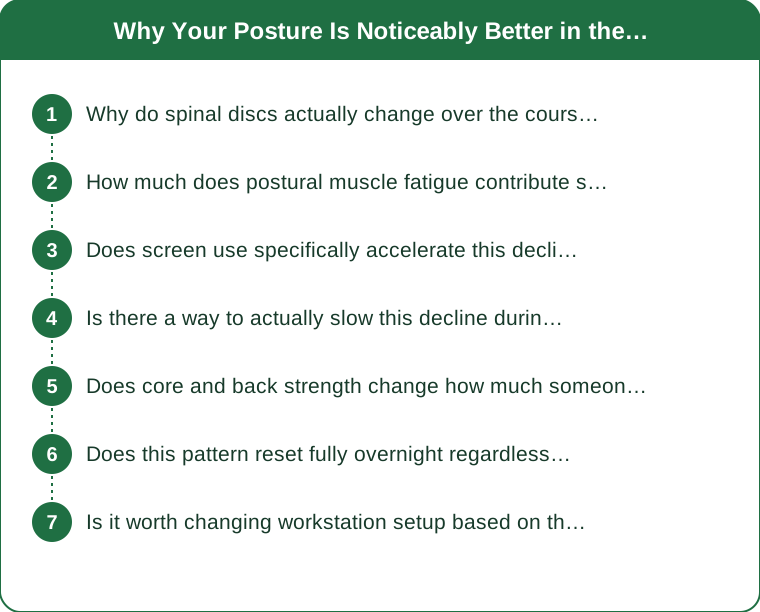
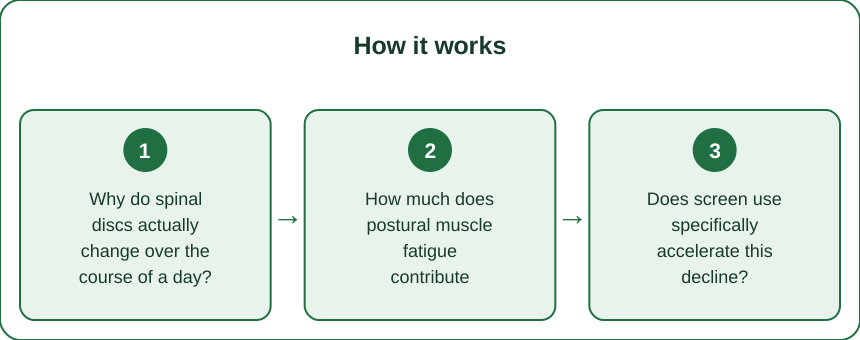
Why do spinal discs actually change over the course of a day?
Intervertebral discs absorb fluid overnight while lying down, which slightly increases spinal height and disc cushioning first thing in the morning. Throughout the day, gravity and sustained loading — sitting, standing, walking — gradually push fluid back out of the discs, reducing that cushioning and subtly changing how the spine settles into posture by evening. This is a well-documented daily cycle, and it’s measurable: many people are genuinely a small fraction of an inch taller in the morning than at night, which reflects the same underlying disc hydration change that also affects postural ease.
How much does postural muscle fatigue contribute separately from disc changes?
The small stabilizing muscles along the spine — particularly in the upper back and neck — work continuously throughout the day to resist gravity and maintain alignment, and like any muscle under sustained low-level contraction, they fatigue gradually. By afternoon, especially after hours of desk work, these muscles have less capacity to actively hold an upright position, which compounds with the disc-related changes rather than acting as a separate, unrelated cause.
Does screen use specifically accelerate this decline?
Yes, meaningfully — forward head posture while looking at a screen places significantly more cumulative load on neck and upper back muscles than a neutral head position, and hours of that added load speeds up the fatigue-related posture decline beyond what disc changes alone would produce, which is part of why desk-heavy days feel worse posturally than more varied physical days.

Is there a way to actually slow this decline during the day?
Brief posture resets every 30-45 minutes — standing, a short walk, or simply a deliberate re-alignment — give fatigued stabilizing muscles short recovery windows rather than allowing continuous, unbroken loading. This doesn’t reverse the disc hydration change, but it measurably slows how quickly the muscular fatigue component compounds, which is often the more correctable half of the afternoon decline.
Does core and back strength change how much someone notices this pattern?
Yes — individuals with stronger postural endurance in the back and core muscles tend to notice a less dramatic decline over the day, since their stabilizing muscles have more reserve capacity before fatigue meaningfully affects alignment, even though the disc hydration pattern itself is essentially universal regardless of fitness level.
Does this pattern reset fully overnight regardless of how the day went?
Largely, yes — the disc rehydration process that happens during lying-down sleep is fairly reliable night to night, which is why posture typically feels noticeably easier again the next morning even after a particularly posture-taxing previous day, rather than the decline compounding across multiple days.
Is it worth changing workstation setup based on this daily pattern?
Often yes — some people find scheduling posture-demanding tasks (detailed, focused desk work) earlier in the day when postural capacity is naturally higher, and reserving standing or movement-based tasks for the afternoon, works with this pattern rather than against it, though this isn’t practical for every schedule.
TL;DR:
- Spinal discs are more hydrated and cushioned in the morning, less so by evening
- Postural stabilizing muscles fatigue gradually over the course of the day
- Screen use with forward head posture accelerates the muscular fatigue component
- Brief posture resets every 30-45 minutes slow the correctable part of the decline
- The pattern resets fairly reliably overnight through normal sleep
The afternoon slump is a predictable physiological pattern, not a discipline problem.
Keep Reading
This article is for general informational and styling purposes only. Fit, sizing, and product availability may vary.