Desk Posture Exercises to Undo Sitting All Day
Eight hours in a desk chair quietly rewrites your posture — rounded shoulders, a stiff neck, a lower back that starts complaining around 3 p.m. The fix isn’t a $400 chair or a standing desk you’ll ignore by Thursday. It’s a handful of specific exercises and habits you can slot into gaps you already have.
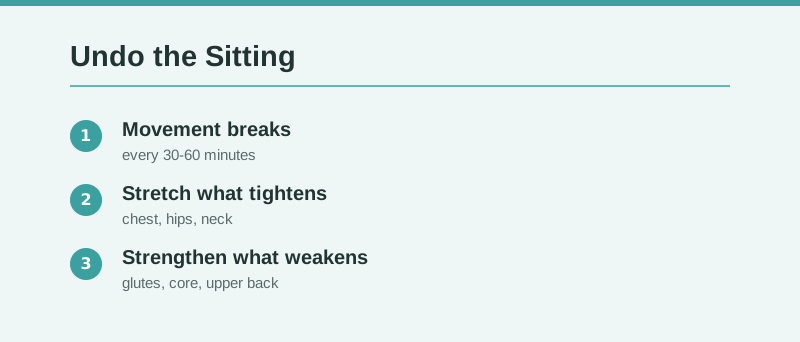
Quick Answer: Undo desk posture damage by moving every 30-60 minutes, stretching what sitting tightens (hip flexors, chest, neck), and strengthening what it weakens (glutes, core, upper back). Stick with it for 2-3 weeks and most people notice a real difference in how their neck and lower back feel by the end of the workday.

How often should you get up from your desk?
Aim for a movement break every 30 to 60 minutes — you don’t need a full walk, just 60-90 seconds of standing, stretching, or pacing to the water cooler. Set a silent timer if you know you’ll lose track (most of us do). This single habit does more for posture than any gadget you could buy, because it interrupts the one thing your body genuinely can’t handle: staying frozen in one shape for hours.
If you’re glued to back-to-back meetings, try standing for at least one of them, or pace during phone calls where you don’t need to be on camera. Even 2 minutes of movement per hour measurably reduces the stiffness that builds up by lunchtime.
Which muscles get tight from sitting all day?
Sitting shortens three areas in particular: your hip flexors, your chest, and your neck. Your hip flexors stay flexed for hours, so they adapt by getting shorter and pulling your pelvis forward. Your chest rounds inward toward the keyboard, and your neck cranes toward the screen.
- Doorway chest stretch: arm on the frame, step forward gently, hold 20-30 seconds per side.
- Standing hip flexor stretch: lunge position, tuck your pelvis under, hold 20-30 seconds per side.
- Neck stretches: ear to shoulder, chin to chest, hold 15-20 seconds each direction.
Two or three rounds of these through the day releases the tightness that sitting builds up, one small dose at a time.

What exercises strengthen posture at a desk job?
Sitting doesn’t just tighten muscles — it lets others go quiet from disuse, mainly your glutes, core, and upper back. Weak versions of these muscles can’t hold you upright once you finally stand up, so you slump right back into the shape sitting taught you.
- Glute bridges: 2 sets of 12-15 reps, squeeze at the top for a beat.
- Band pull-aparts or scapular squeezes: 2 sets of 15 reps to wake up the upper back.
- Dead bug or plank holds: 20-30 seconds, 2-3 rounds, for core stability.
Ten minutes total, done 3-4 times a week, is genuinely enough to start rebuilding the support your spine needs.

How should you set up your desk to protect your posture?
A poor setup undoes a lot of good exercise work, so a few adjustments go a long way:
- Monitor: top of the screen at eye level, about an arm’s length away.
- Chair: back supported, hips slightly above knee height.
- Feet: flat on the floor or a footrest, not dangling or tucked under you.
- Keyboard and mouse: close enough that your elbows stay near 90 degrees.
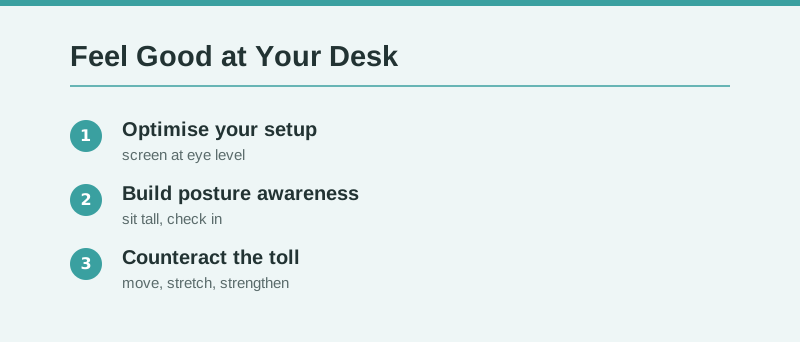
Get this right and your posture exercises have far less damage to undo in the first place — prevention doing half the work.
Myth vs Fact: Desk Posture Edition
Myth: There’s one “correct” posture you should hold all day. Fact: The best posture is actually your next posture — shifting position regularly matters more than finding one perfect pose and freezing in it (your spine isn’t a statue, no matter how good your chair looks).
Myth: A posture corrector brace fixes the problem. Fact: Braces can cue awareness short-term, but they don’t build strength. Skip the sci-fi shoulder harness and do the band pull-aparts instead.
Myth: Standing desks solve everything. Fact: Standing still for 8 hours is just a new way to be stiff. The goal is variation, not swapping one static position for another.
When should you see a professional about posture pain?
Mild stiffness and end-of-day achiness usually respond well to the habits above within a couple of weeks. But see a physical therapist or doctor if you notice numbness or tingling down an arm or leg, pain that wakes you up at night, or discomfort that doesn’t ease up after a few weeks of consistent effort. Persistent, sharp, or radiating pain is your body asking for more than a doorway stretch.
FAQ
How long does it take to fix desk posture?
Most people notice less end-of-day stiffness within 2-3 weeks of consistent movement breaks and daily stretching. Full postural changes — like rounded shoulders visibly improving — typically take 6-8 weeks of regular strengthening work.
Is it bad to sit with your legs crossed at a desk?
Occasional crossing isn’t harmful, but holding it for hours can tilt your pelvis unevenly over time. Switch sides regularly or keep both feet flat on the floor as your default position.
Do standing desks fix bad posture?
Not by themselves — standing with slumped shoulders is still bad posture. A standing desk helps most when you alternate sitting and standing every 30-60 minutes rather than picking one position for the whole day.
TL;DR:
- Take a movement break every 30-60 minutes, even if it’s just 60-90 seconds.
- Stretch tightened areas: hip flexors, chest, and neck, 20-30 seconds per stretch.
- Strengthen weakened areas: glutes, core, and upper back with bridges, band pull-aparts, and planks.
- Set your desk up right — eye-level monitor, supported back, flat feet, elbows near 90 degrees.
- Build ongoing posture awareness throughout the day instead of only fixing it once.
- See a professional if you notice numbness, tingling, or pain that doesn’t ease after a few weeks.
Keep Reading
This article is for general informational and styling purposes only. Fit, sizing, and product availability may vary.